How to Manage RAM Usage in Windows?
Windows requires a certain amount of RAM to run its operating system, background services, and built-in features. Windows normally consumes more RAM than other operating systems to give users a better experience.
However, this high RAM usage can sometimes lead to slow system performance, applications freezing or lagging, or other issues while working.
In this guide, you will learn how to monitor and manage Windows RAM usage, reduce unnecessary RAM consumption, optimize background processes, and improve your system’s overall performance.
Check RAM Usage in Windows
Before starting to optimize RAM usage, you should check which applications and services are consuming memory.
If your system doesn’t have enough resources to run your required applications. You can use online solutions like Windows VPS, which gives you access to a high-end system online, which can help you a lot instead of upgrading your local computer.
But before upgrading, it’s worth trying to optimize your own computer.
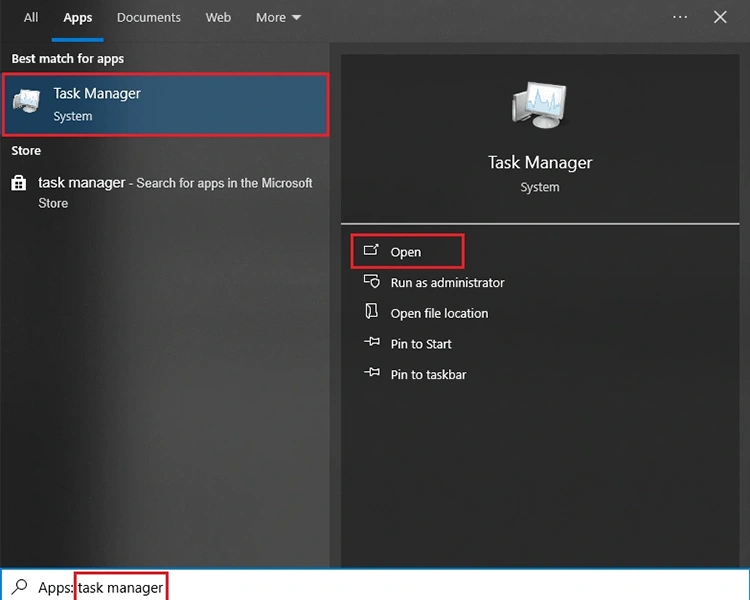
Open Task Manager
To check system running apps and system overall performance, you can use the Task Manager application, which is a built-in app in Windows itself. You can open it by searching for it in the Start menu or pressing CTRL + SHIFT + ESC.
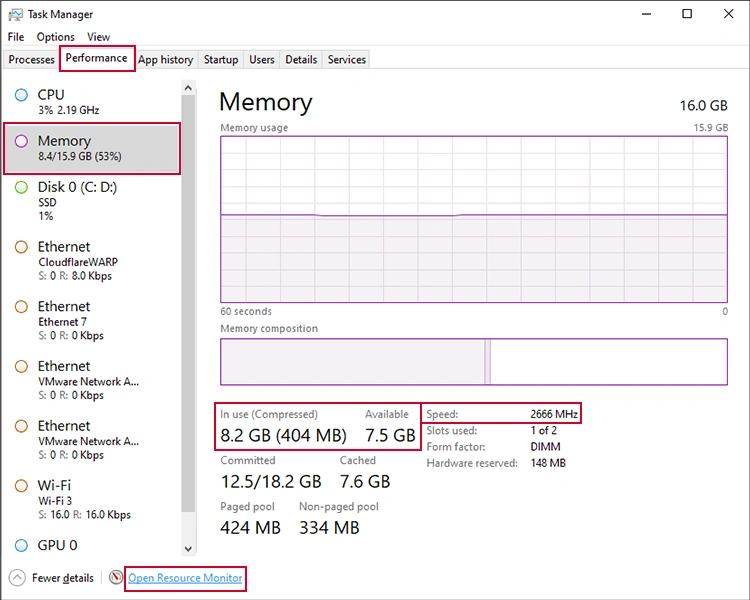
Go to the Performance tab and click on Memory. Here you can see detailed information about how much RAM you have in your system, how much RAM is getting used, and your RAM clock speed, etc.
Check Programs Memory Usage
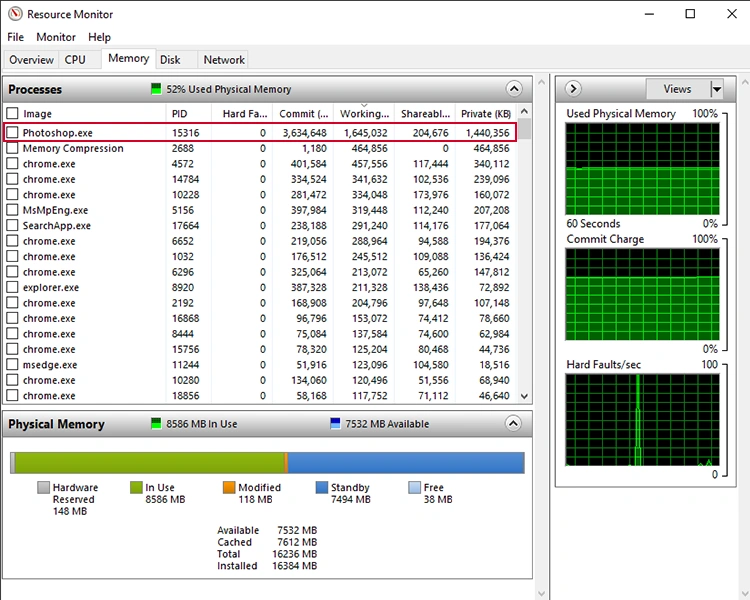
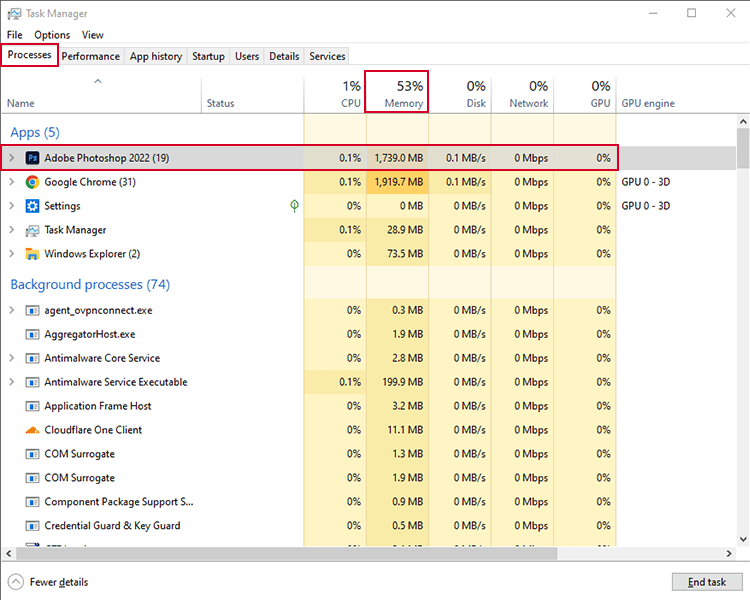
Task Manager can also show which programs are consuming this RAM space. Click on Open resource monitor in Performance> Memory, or go to the Processes tab.
Here in the Resource Monitoring tab, you can see full detailed information about application which are using memory.
Or go to Task Manager> Processes page; here you can see the same information with a better visual. Click on Memory at the top to sort the applications by memory usage from high to low.
Close Unwanted Apps in Windows
When closing applications in Windows, many of them keep running in the background, or some of them that you didn’t open are running in the background too, which are consuming RAM too.
End Task Application
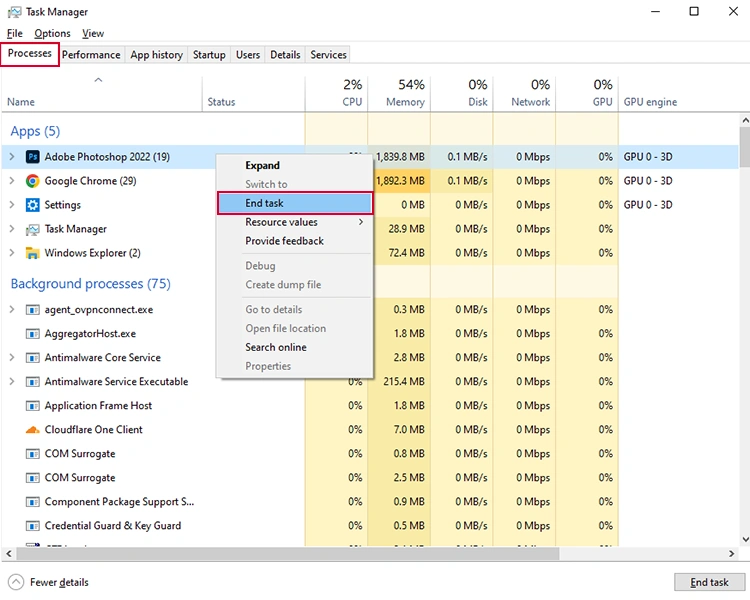
After checking the running applications in Task Manager, you can close the ones you don’t need anymore, or that are running for nothing and using RAM space.
Just find the application you want, right-click on it, and click on End Task. Or, if you want more detailed information about killing the process of a running application on a port or managing the application much more professionally, follow this article:
How Kill a process running on a port in Windows?
Note: Do not close important Windows processes unless you know what they do.
Avoid ending processes such as:
- Windows Explorer
- Desktop Windows Manager
- System
- Service Host Processes
Disable Startup Apps in Windows
In Windows, some of the application your are installing or installed on Windows by default or set to run automatically on every boot. So they will run in the background without you noticing them and use RAM too.
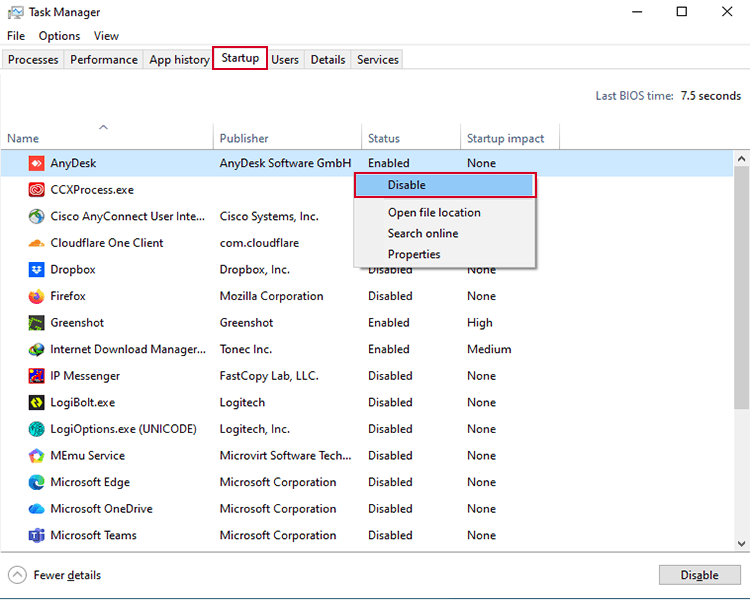
To disable their startup option, go to Task Manager > Startup.
Here you can see all apps which set to start on startup. You can easily right-click on them and click on Disable.
Manage Background Apps on Windows
Windows 10 and above allows applications to run in the background. To disable unnecessary background apps, go to Windows Settings> Privacy > Background apps or simply search for background apps in the Start Menu.
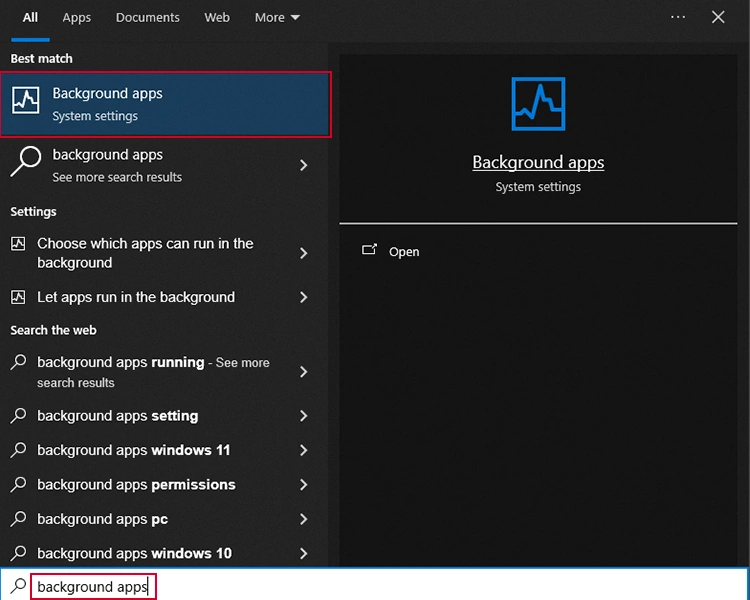
Here you can see all apps that have permission to run in the background, which can consume RAM space.
1. You can disable apps from running in the background fully, which doesn’t allow any apps to run in the background.
2. Or you can select which apps you don’t want to run in the background.
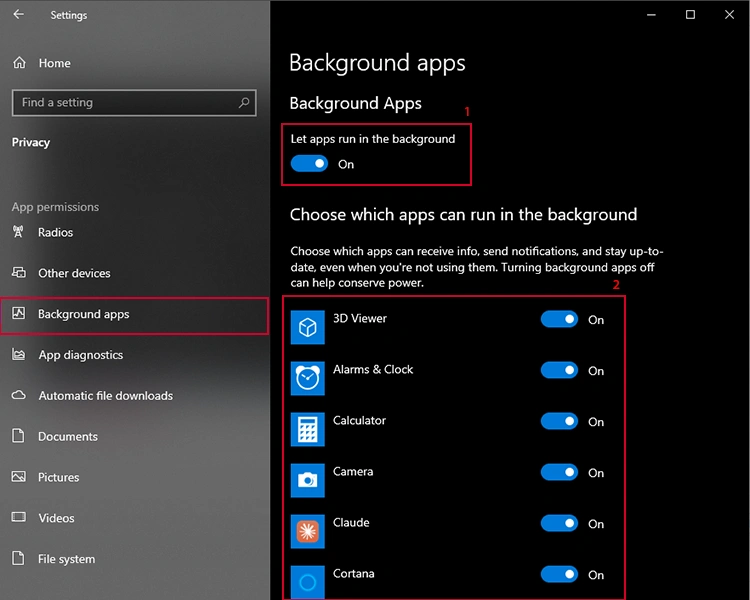
You can disable unused apps like Xbox Apps, Weather, Maps, Cortana, 3D viewer, etc…
Reduce Chrome RAM Usage
The web browser is one of the biggest RAM consumers. Browsers like Chrome and Edge use separate processes for each tab and extension, which improves stability but increases RAM usage.
To reduce Chrome RAM usage, you can close unused tabs, remove unnecessary extensions, and you can enable Chrome Memory Saver.
Remove Chrome Extensions
You can remove or disable the extensions that you are no longer using by going to “chrome://extensions/”.
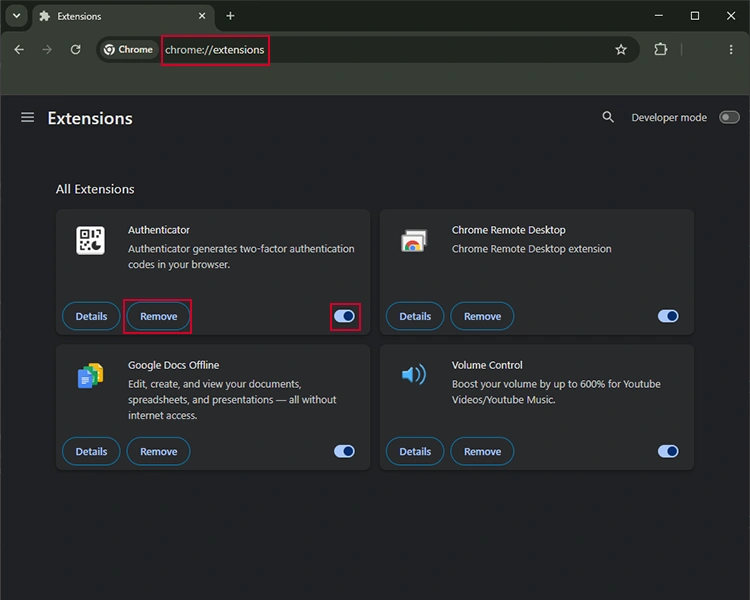
Enable Chrome Memory Saver
Chrome Memory Saver feature reduces RAM usage by releasing memory from inactive tabs. This helps to lower overall system RAM consumption and provides a smoother experience when working with other tabs.
Enter “chrome://settings/performance” in the search bar and enable Memory Saver. You can set its performance to moderate, balanced, or maximum based on your needs; They differ in the amount of time Chrome waits before deactivating inactive tabs.
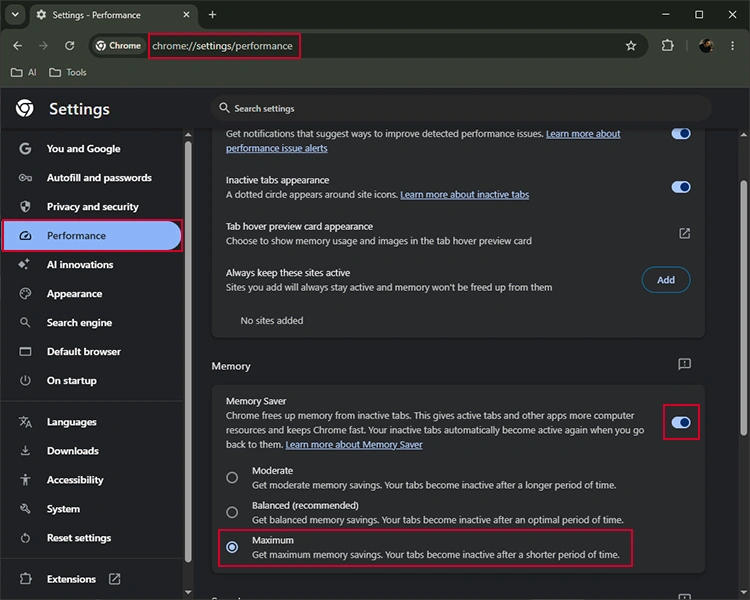
Here we’ve selected the Maximum option, which deactivates inactive tabs after a short period of time. Which cause refresh of the tab when you return to it.
Restart Windows to Clear RAM Cache
Windows manages RAM automatically, but over time some applications and processes may leave cache in RAM or continue using RAM even if they are closed.
Restarting you windows is the simplest way to refresh system memory and remove cached data in RAM. When you restart your computer, it completely closes running applications, reloads system services, and cleans up temporary allocated memory storage.
For computers that run continuously for long periods, such as systems used for gaming, development, heavy multitasking, or Windows VPS environments that operate 24/7, restarting the system can be an effective way to restore performance after extended usage.
Windows Virtual Memory
When your system runs out of memory, Windows uses a feature called Virtual memory to temporarily store some data on your storage drive. This space is called the paging file or page file; this is the same as Linux swap.
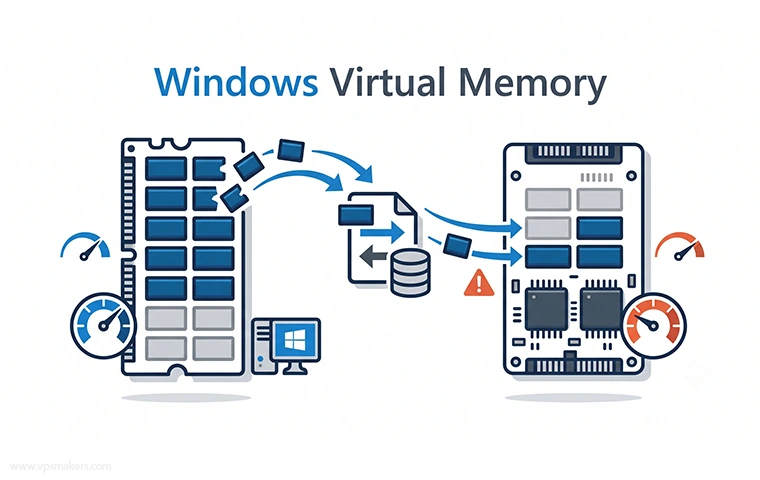
Virtual memory helps Windows continue running applications even when the physical memory is full. However, because SSDs and HDDs are much slower than RAM, relying on virtual memory can reduce performance and make applications feel slower.
Increase Windows Virtual Memory (Paging)
Windows handles this space automatically, but you can modify its values manually. Follow the steps below to learn how.
Step 1 – Open Run by pressing the Win + R shortcut or by searching for it in the Start menu.
Step 2 – Type the text below and press Enter to open System Properties.
sysdm.cpl
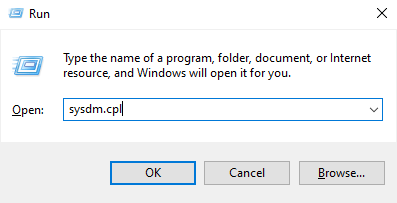
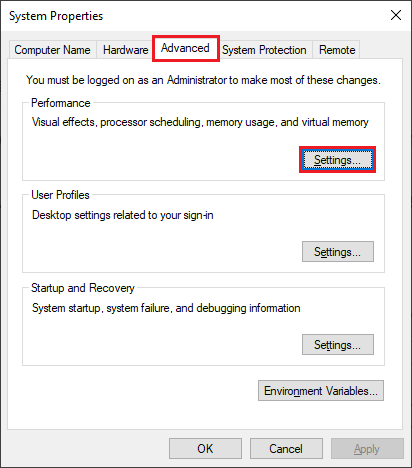
Step 3 – Go to the Advanced tab and, in the Performance section, click on Settings.
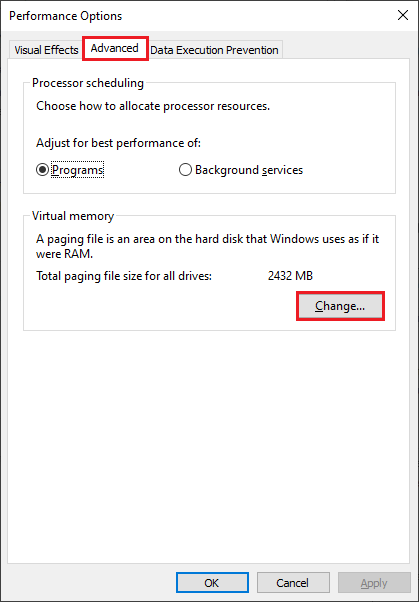
Step 4 – In the opening tab, go to the Advanced tab and, in the Virtual Memory section, click on Change.
Step 5 – Disable the automatic option, select the Drive you want to allocate space from, select custom size, and set the initial and maximum size that it will use from the disk space. Then click OK.
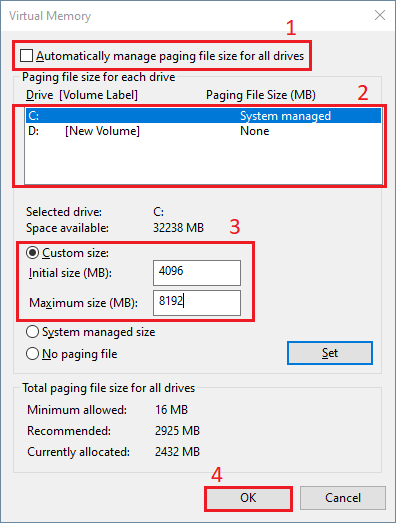
You will be prompted to restart your system to apply these changes.
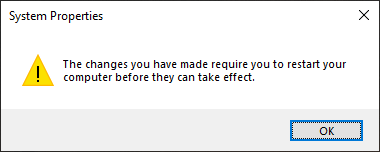
Note: Virtual Memory is not a replacement for physical RAM. It only acts as a backup space when RAM is full. And setting the paging file size too large can consume disk space unnecessarily.
Disable Unnecessary Windows Services
Windows runs many background services by default. While some of them are essential for system stability and functionality. But some services may not be needed depending on your use case. These services can consume RAM even when you are not using them.
Manage Windows Services
To open Windows Service Manager, press the Win + R shortcut or search for Run in the Start menu.
Type the text below and press Enter:
services.msc
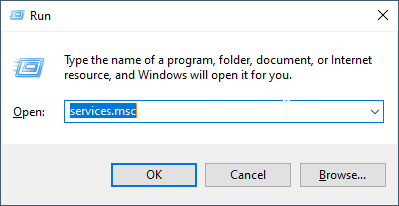
Find the services you want to modify. Here in the table below, you can see some examples of them:
| Service Name | Description |
|---|---|
| Fax | if you don't use any fax functionality, you can disable it |
| Print spooler | can be disabled if you are not using a printer |
| Xbox Services | Xbox Accessory management, Xbox Live Auth Manager, everything related to Xbox can be disabled if not using them for gaming |
| Bluetooth Support Service | if you are not using Bluetuth you don't need it. |
| Windows Error Reporting Service | This sends error reports to Microsoft which can be disabled for privacy |
| Secondary Logon | Allows running programs as another user; often unnecessary for home users. |
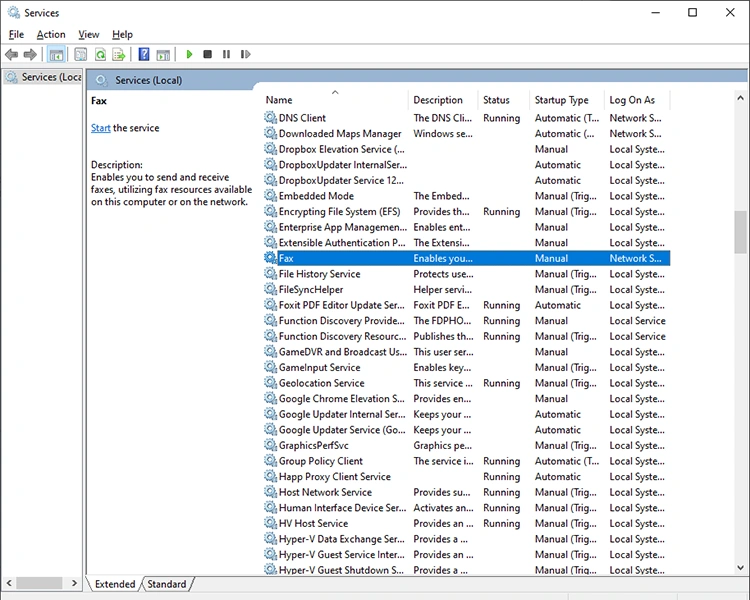
Double-click on the desired service; it will show you its settings. Click on stop to stop the service the set its startup status to disabled to don’t run the service on next boot.
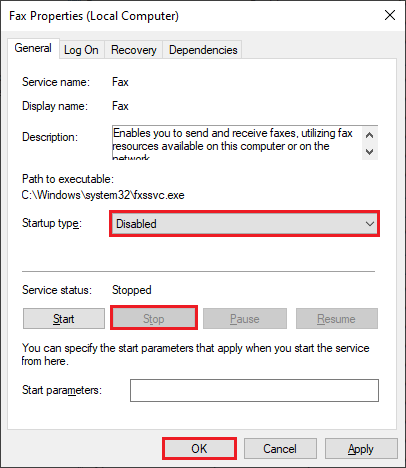
Note: Be careful when disabling a service; some of them are critical for Windows to run tasks like networking, updates, and security. So if you are not sure what this service does, set its status to manual instead of disabled. And search for each service’s specifications before disabling it.
Remove Unnecessary Applications in Windows
Over time, your computer may accumulate applications that are no longer needed, and many of them can run in the background, which removing them helps to free up memory.
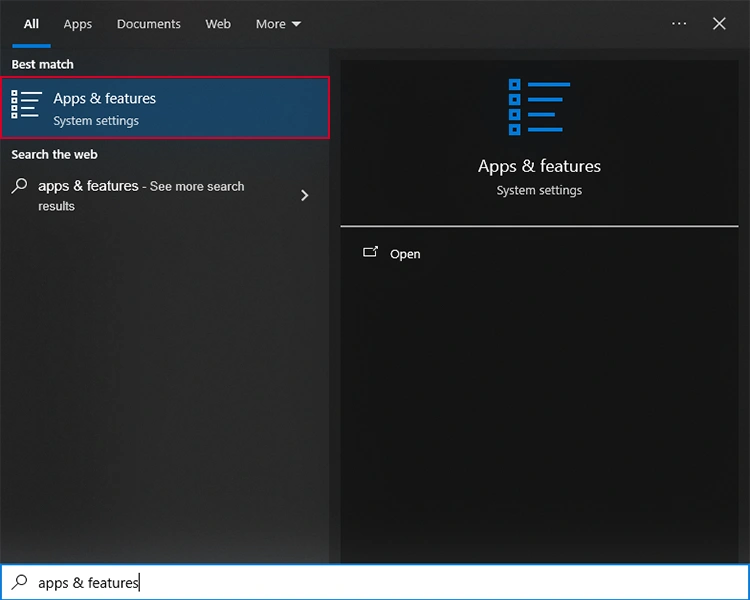
Go to Settings> Apps > Apps & Features or easily search for Apps & Features in the Start menu
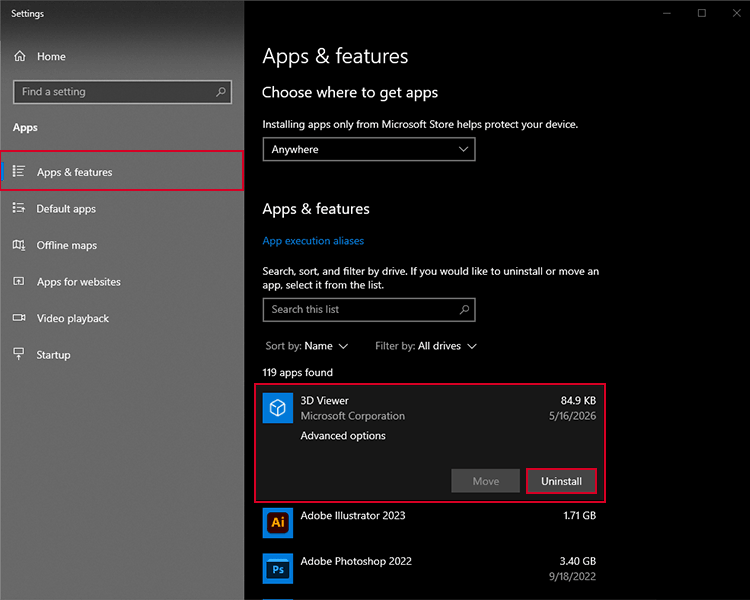
Here you can see all the applications installed on your system so you can select the desired app and click on Uninstall to remove it fully from your system.
Update Windows and Drivers
Keeping Windows and system drivers up to date is important to prevent memory-related issues. Out date softwares, incompatible drives, or Windows bugs can cause excessive memory usage and unexpected system behavior.
Updates often include performance improvements, security fixes, and bug patches.
If you want better performance and compatibility in Windows, you need to update Windows and its drivers, like the graphics driver, Chipset driver, Network driver, etc.
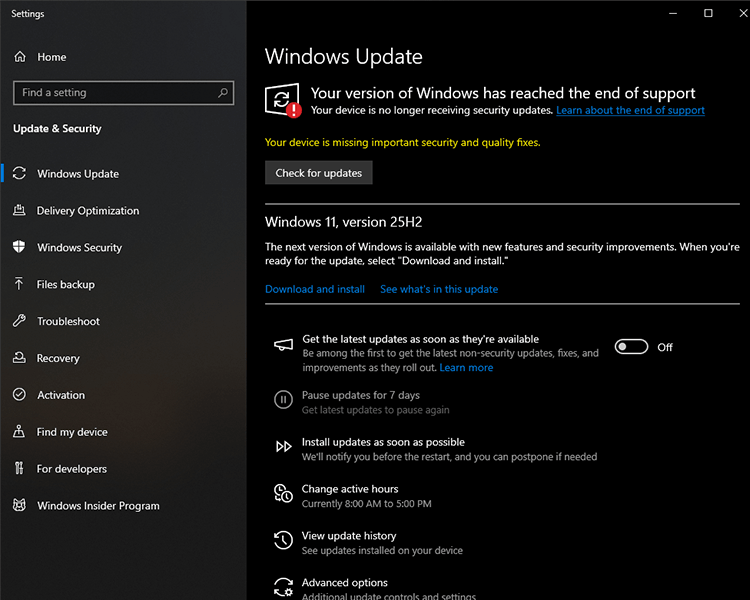
It’s better to enable Windows auto-update in Windows Update settings to always be up to date.
As you may know, Windows 10 is no longer getting official security updates from Microsoft. In this cases to your need to upgrade you windows to a new version, which is Windows 11.
If you are using Windows Server in any version, you should update it too, or you can migrate to new versions of Windows Server, which, if you want, you can consider our services: Buy Windows Server VPS
Check for Memory Leaks on Windows
A memory leak happens when a program keeps using RAM and doesn’t release the allocated memory space properly after finishing its tasks. Over time, this can cause your system to slow down.
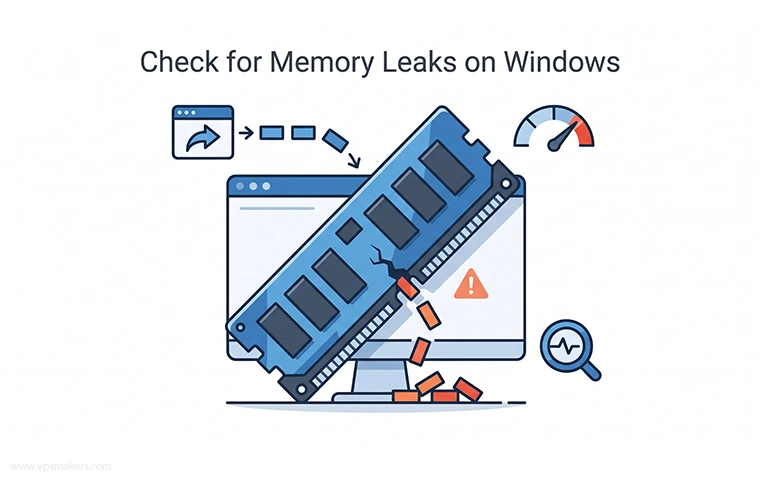
If RAM usage keeps increasing even when you are not doing anything, or if your computer becomes slower over time, or when restarting, some of the problem gets fixed, but you face the same problem again, it can be because of Memory Leaks.
To check which applications are using memory, you can use Task Manager, which we discussed in previous sections.
You just need to check the Memory column. See which applications are using memory for non sense, even if they are closed. Just right-click on them and click on End Task to kill its proccess.
After finding the application, if you don’t use this application, you can uninstall it, or if you want to use it, make sure to update it to the latest version, or reinstall it to fix the memory leak issue.
Use Windows Memory Diagnostic Tool
Windows offers a built-in tool called the Windows Memory Diagnostic Tool that helps to check your computer’s RAM for possible hardware issues.
If all the software solutions for managing RAM usage and lowering it fail, you should use this tool to scan your RAM for hardware problems, if it has any.
Run Windows Memory Diagnostic
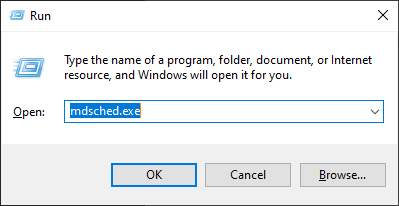
To run the Memory Diagnostic tool, press Win + R to open Run and type: mdsched.exe and press Enter, or you can search for it in the Start menu.
mdsched.exe
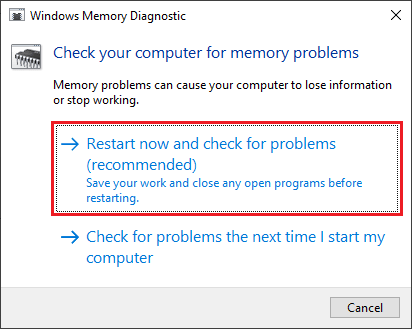
Here, on the opening page, click “restart now and check for problems“.
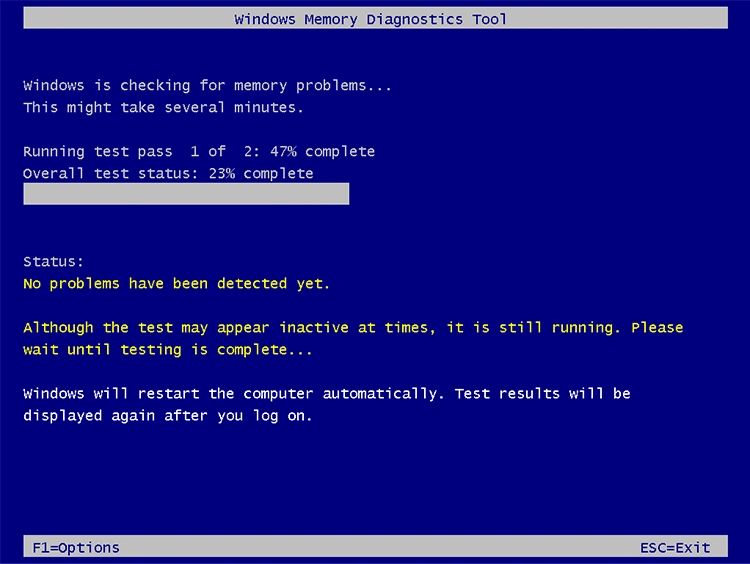
It will restart your computer and begin scanning it in the BIOS environment. Wait until the diagnosis finishes; it will restart the system again and alert you if any problems are found or not.
Add More Physical RAM
If, with software solutions, you are reaching 80% – 100% RAM usage, it means the software optimization is not enough. You should add more RAM depending on your use case for your computer to make your system run smoother and with better performance.
If you are using modern application or, editing photos and videos, or constantly playing demanding games, you should consider upgrading your RAM physically.
In the table below, you can see the recommended amount of RAM for different use cases.
| Usage | Recommended RAM |
|---|---|
| Basic browsing | 4 GB – 8 GB |
| Multi tasking | 8 GB – 16 GB |
| Office work | 8 GB – 16 GB |
| Web development | 16 GB |
| Gaming (esports titles) | 16 GB |
| Modern AAA gaming | 16 GB - 32 GB |
| Data science / ML (entry-level) | 16 GB - 32 GB |
| Video editing (1080p–4K) | 32 GB - 64 GB |
| Professional workloads | 32 GB+ |
These recommended values are general guidelines. The real amount of RAM you need depends on the applications and the workload you are working with.
Note: Before upgrading RAM make sure your motherboard or laptop’s maximum supported capacity, memory type, and speed. And for laptops, you should check whether your RAM is upgradable or not.
Common RAM Optimization Mistakes
Not every RAM optimization method actually improves performance. Some of them can even cause your Windows to work less efficiently or create system problems and cause bugs in some applications.
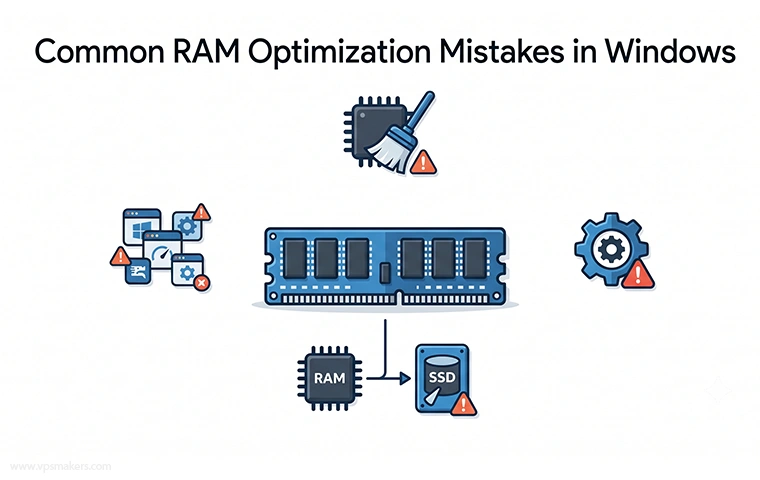
You should not trust all RAM optimization methods and applications; they can cause problems besides fixing some issues.
Using RAM Cleaner Programs
Many third-party RAM cleaner apps claim to free up memory and improve performance. However, they often provide little benefit but sometimes can make the system slower too.
Some of these applications force Windows to clean cached data in RAM. Windows can use this cached data to make some programs run smoother and load some files faster. Removing the cached data can make these actions run slower.
Instead of using RAM cleaner applications, you can focus on the methods described in this article to make your system run better.
Disabling Random Windows Services
Disabling Random Windows services without knowing what they are doing can cause more problems than solving RAM issues.
Before disabling any service on Windows, search for its purpose on Google or on any AI tool to make sure you need it or not. If you are not sure about the service, just leave it running so you don’t cause any disasters.
Increasing the Page File Amount Too Much
Increasing Windows page file or virtual RAM does not give your computer the same performance as adding physical RAM. The page file uses a storage drive, which is much slower than RAM.
A larger page file can help prevent crashes when RAM reaches its full limit, but setting an extremely large page file doesn’t improve your system performance.
Summery
Memory management in Windows 10 and 11 can help keep your Windows responsive and prevent slowdowns when running multiple applications at the same time.
Start by checking which applications or services are using the most memory, then close or remove unnecessary applications and background services.
Keeping your Windows and its drivers up to date, managing Chrome tabs and extenstions which uses the most RAM most of the time in computer, and checking for memory leaks, restarting your computer regularly can help maintain your computer performance too.
If after doing all the steps, you are running out of RAM again and your RAM usage is continuously high, consider upgrading your physical RAM based on your workload.
Or you can instead of upgrading your own system, you can buy Windows VPS and migrate your workflow to a cloud-based OS to work without any performance issues.

The Author Robert Smite
Hello! I'm Robert, specializing in virtual servers and cloud technology. With expertise in managing and optimizing virtual servers, my focus is on delivering understandable and practical content in this field. My goal is to enhance knowledge and assist individuals in selecting the best virtual services for their needs.
More from Robert Smite