
How to find VPS IP address in Ubuntu?
Finding the IP address of your VPS is one of the first things you may need when managing an Ubuntu server. Whether you want to configure a firewall, configure a domain, or troubleshoot your network, you need to know which IP address your server uses.
In Ubuntu, there are several ways to find your IP address, depending on how you use your server. You can check it through the graphical user interface (GUI) or directly from the command line (CLI).
Find IP Address on Ubuntu
Finding the IP address on Ubuntu and other Linux distributions is mostly the same, but the network configuration and setup are different on each Linux distro. So you can use the method in this article on every Linux distro to check and verify their IP address.
If you bought an Ubuntu VPS, your hosting provider should give you an IP address that you can use to connect to your server.
If you are running Ubuntu locally instead, you may need to check whether the system already has an IP address assigned or configure one manually.
Find IP Address on Ubuntu With Terminal
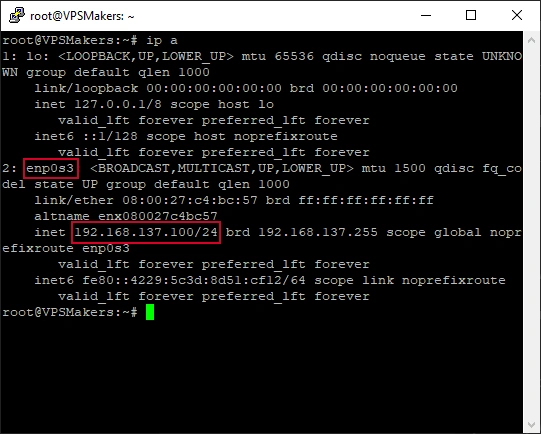
If you are using Ubuntu via a terminal, you can find your server’s IP address with built-in commands. The easiest way is to use the “ip” command, which shows your network interfaces and IP addresses assigned to them.
You can use the following commands to get your server network information:
ip addr
Or you can use:
ip a
Running the commands above shows information about all network interfaces on your device with their name, IP address, broadcast IP, IPv6 address, etc.
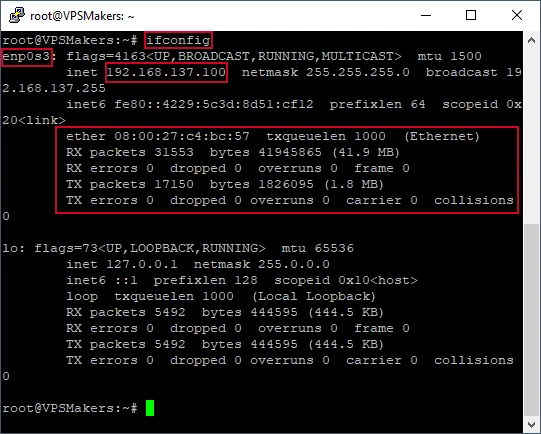
Instead of the ip command, you can use the ifconfig command to view more structured information about your network interfaces, including details about incoming and outgoing packets.
ifconfig
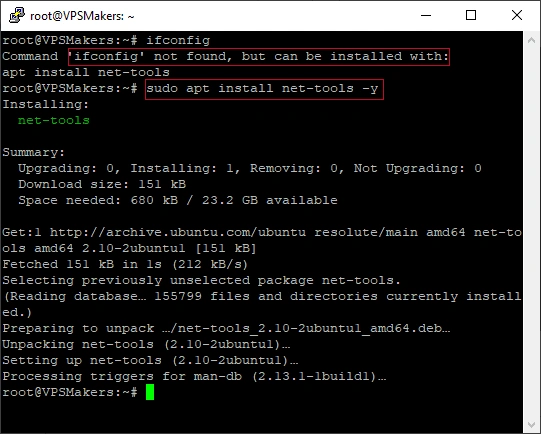
Note: To use the ifconfig command, you need to have net-tools installed on your system; otherwise, you get an error. You can install net-tools with the command below:
sudo apt install net-tools -y
To get only the IP address without extra information, you can use the command below:
hostname -I
Find IP Address in Ubuntu With GUI
If you don’t want to use the command line to manage your Ubuntu, you can use the GUI version; however, the Ubuntu Server versions don’t have a GUI installed.
You can install Gnome on Ubuntu Server, and you can use it by connecting to it remotely.
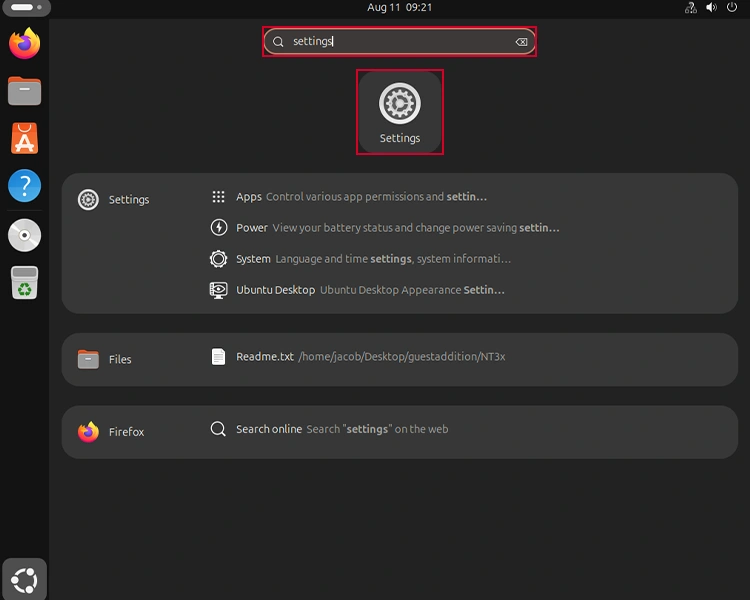
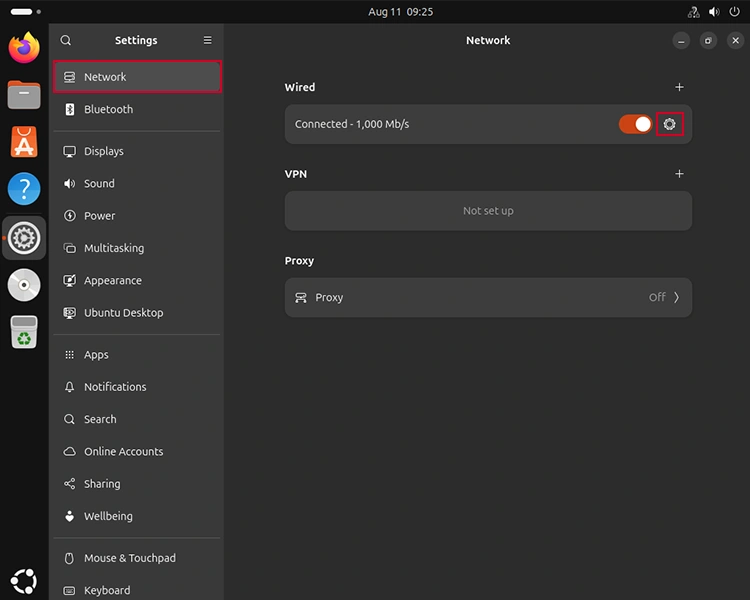
After opening your Ubuntu desktop, either locally or on the server. Go to the Settings app.
In Settings, go to the Network tab and click on the icon on your connected network interface to modify its configuration.
Here in the Details section, you can see full detailed information about network configuration, both IPv4 and IPv6 addresses, gateway IP, etc.
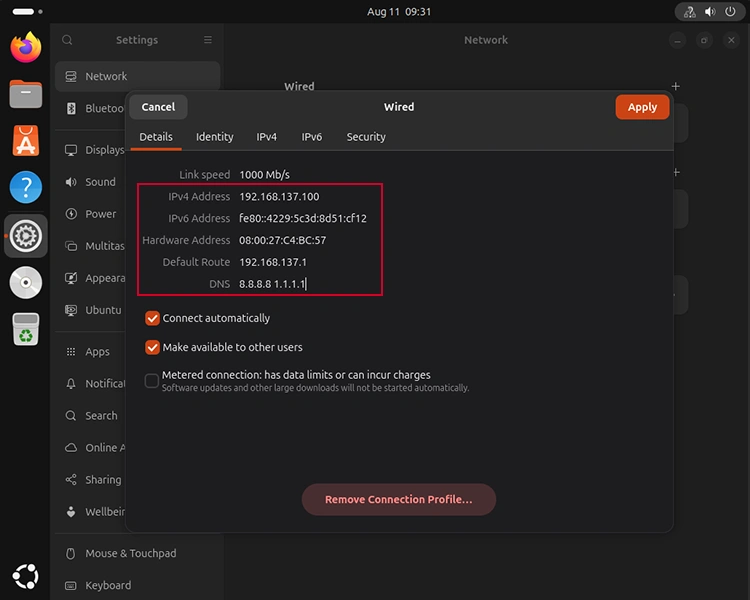
Here in the image above, we used a local Ubuntu device, and you can see the IP address is a private IP, not public. But if you are on a VPS, you will see your VPS IP address.
In this section, you can change your network configurations too.
Note: If you are using VPS hosting, you should not modify your VPS IP blindly; otherwise, you will lose your connections whether connected with SSH or using XRDP.
Find IP Address Online on Ubuntu
You can find and verify your IP location on the internet by searching on Google.
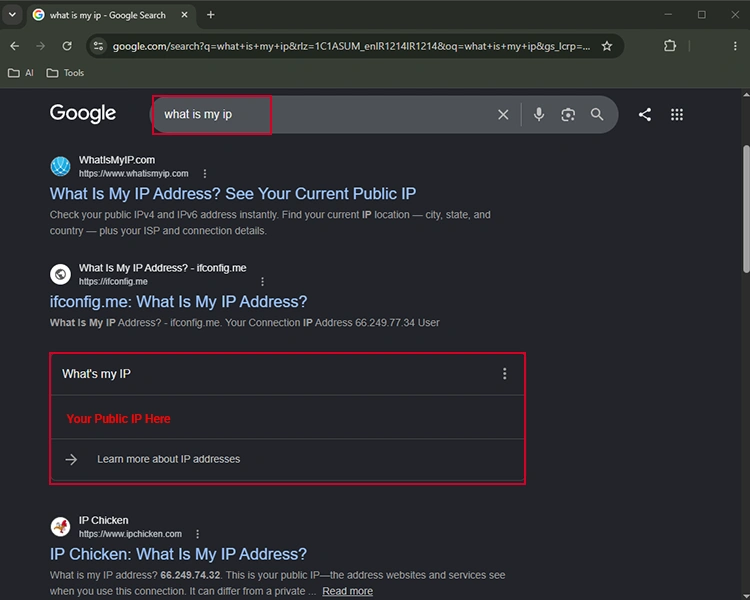
To find the IP address, you need to access the Internet and a browser on your server, and by searching What is my IP address You can check your server’s IP address and location.
First, open your Internet Browser on your Ubuntu desktop; Firefox should be installed by default on Ubuntu; otherwise, you can install Firefox or Chrome on your server.
You can search for “what is my ip” on Google or use popular websites like BrowserLeaks
What is VPS IP Address?
A VPS IP address is a unique numeric identifier that is assigned to your virtual private server (VPS) to be accessible over the internet. This IP address is used to access the internet and communicate with other network devices over the internet.
A VPS can have one or more IP addresses, and you may see both IPv4 and IPv6 when you are checking for network configurations.
IPv4 address and IPv6 address
IPv4 is the most commonly used IP version of the Internet Protocol. It uses a 32-bit address and is written as four numbers separated by periods, such as:
192.168.1.1
IPv6 is a newer version of IP that uses a 128-bit address that provides a much larger range of IPs than IPv4. IPv6 addresses use hexadecimal characters separated by colons, for example:
2001:db8:1234:5678::10
Most VPS providers only assign public IPv4 to your service, which you often use to connect to your VPS server; however, some can provide IPv6 too on your service. But it has an additional cost on your service most of the time.
Summary
To find and verify the IP address in Ubuntu, you have multiple ways, depending on how you manage your system. In this article, we’ve covered how to get the VPS IP address with the Ubuntu graphical interface and using command-line tools like ip addr and ifconfig.
Knowing your VPS IP address is essential for tasks such as connecting through SSH, setting firewall rules, or setting an IP domain name for web hosting or managing other network services.
Whether you can install Ubuntu Desktop or minimal Ubuntu server, these methods allow you to quickly find and verify the IP address assigned to your system.

The Author Richard.M
Richard started out as a member of the support team and is now a full-stack web developer and support team lead at VPS Makers. He is passionate about providing people with top-notch technical solutions based on his 5 years of experience in web hosting, but as much as he enjoys coding and creating new works, he secretly dreams of becoming a sports star.
More from Richard.M